Showing posts with label Ankur Biplav. Show all posts

Monday, 27 August 2018

Music Has No Boundaries...


One thing which can’t be stopped from travelling to a different country without a visa or passport is- Art and Music. I will talk about music and some of its gharanas which have travelled across the borders of the country and thus taking its tradition and ethos to a completely new place. Music has no boundaries all it requires is, to touch the human soul with the perfect sur and melody. 
My first exposure to the Pakistani Music was a few days back, when I heard Ustaad Nusrat Fateh Ali Khan on Youtube. Initially, I was sceptical of a form of music I wasn't really keen on exploring. But when I heard some of Ustaad Nusrat Fateh Ali Khan’s
Ustaad Nusrat Fateh Ali Khan
compositions it stunned me. Then, I started exploring more and more about the Pakistani tradition of music. 

Then, I came across a gharana called Sham Chaurasi gharana, which has an interesting story behind its name. In the early years of the last century, in what was the undivided Punjab, a singer was rewarded by his patron with a gift of the revenue from 84 (chaurasi) villages. The singer, whose name was Sham, thereafter came to be known as Sham Chaurasi, and those who sang in his style – both his family and his shagirds (students), who comprised both Hindus and Muslims – were considered to belong to the Sham Chaurasi gharana.
The area comprising these 84 villages is now in India; in 1947, most of the adherents of its musical tradition crossed the newly-drawn line on the map to settle in what is now Pakistan.
Something similar happened with the representatives of the style known as the Dilli gharana. Several of them moved to Pakistan, while some others remained in India.
Gharanas are most often named after a place, rarely after a supposed founder. Sham Chaurasi gharana is an exception which comprise of both the founder’s name as well as the place’s name.

In the case of gharanas like Shyam Chaurasi and Dilli, the change in location for musicians symbolises a lot of things. For now, not only are the gharanas’ singers not located in the supposed place of origin, but a huge difference or the gap also separates them from the place after which the gharana is named. That difference is not just caused by distance. It has more to do with changes in the situations singers have to live with and the social system within which they have to work.
I believe music can be a strong and creative medium to bring about peace and stability between India and Pakistan. Since music is flexible and can surpass all borders, it can play a pivotal role in healing the frayed relationship. This is exactly why we have so many fans in India following the melodious talent that comes from across the border. Faced with strictures against certain forms, ragas, bandishes, even names, Pakistani musicians have successfully adapted themselves to newer techniques and gayakis to fit them into spaces and forms which are considered acceptable.

Thursday, 29 March 2018

SPIC MACAY- An Indian Cultural Movement...

Just saw a post on Facebook which gave the details of the SPIC MACAY’s 6th International Convention at IIT Kharagpur. The organisation has came too far and has been successfully fulfilling its primary objectives.
Prof. Kiran Seth
An organisation which was the vision of a young IIT Kharagpur Graduate, started in a small room, in order to spread Indian music, culture, and heritage to youth across the country, Spic MACAY was started by Kiran Seth.
Prof Kiran shares that many people opposed the idea initially. “When we started, most people were of the opinion that there were many more important problems that faced mankind. Many of my colleagues, friends and relatives often asked me why I was wasting my time on ‘gaana bajaana’. I must admit that I was often confused and did not know whether I was on the right track, but some intuition kept me going.”
Keeping the goal of connecting the youth with something which is their own, which is something to be proud of, was what Prof. Kiran was after. SPIC MACAY not only introduces the students or the youth to the Indian classical music, dance, folk music, yoga and other fields of Indian culture but also tries to develop their interest in these fields. An organisation which started just as an unique experiment has worked effectively for many students, helping them in understanding the fine art of living.

Pt Jasraj at performing at SPIC MACAY's concert
Over the past decades of Spic MACAY’s existence, its activities have comprised of performances and workshops on folk and classical arts held in different educational institutions across the country which has been made possible by a strong volunteer force.
The organisation has grown organically, falling, but rising each time, and learning all the way. The organisation believes that experiencing performances, and learning of unknown art forms not only instills a sense of appreciation among the youth, but also shows us how pluralistic our country is. It shows us how rich our culture is and how unknown we are to it. The biggest challenge the movement faces is the lack of funds. As per the policy of the organisation, participants pay no fee, and the organisation solely depends on donations, and government, corporate, and individual grants and sponsorships.

With exposure to the fine arts over the 40 years, Spic MACAY’s work has helped the Indian youth to take pride in being Indian, appreciate the rich and pluralistic culture of the country, and to also become sensitive to others around them.

Saturday, 24 February 2018

Katyar Kaljat Ghusali- A Marathi Movie Review!

Some are movies and then some are masterpieces. Movies have actors while, the masterpieces comprise the characters portrayed with perfection. The masterpiece –
Katyar Kaljat Ghusali– is a beautiful movie which has music as its central character, and that too classical music. Moreover, it has many firsts. Shankar Mahadevan has debuted as an actor, Subodh Bhave has debuted as a director, Sakshi Tanvar has debuted in the Marathi film and Sachin Pilgaonkar playing a classical singer for the first time! The 4 ‘S’ brings a lifetime experience, that goes hand in hand with drama, music, cinematography and dialogues.
It has the stalwarts singer Vasantrao Deshpande playing one prominent role and Pt Jitendra Abhisheki playing the other. The drama is set in the pre-independence period and has the whole setting accordingly which carries the weight and nostalgia of the whole play. The story revolves around the ego and ambition of Khansaheb to become the king’s musician. It is narrated in the form of a musical fight between the 2 schools (gharanas) of music represented by him and Pandit Bhanu Shankar Shastri. It has all the elements of film- deceit, greed, revenge and politics while the opposite side has determination, love, devotion and righteousness.
The music is so mesmerising here that it truly transcends the boundaries of language and culture and one does not need to understand Marathi to appreciate this movie.
Classical music lovers like me, will will treasure this movie, while the uninterested one’s will come out with a new admiration and passion for this genre of music. The music is the heart and soul of the film. The presentations of the bandishes like Soorat Piya Ki and Dil Ki Tapish are sure to bring tears to the audience’s eyes. Such a wonderful renditions all the songs are! Shankar Ehsaan Loy have really done a fantastic job with the music.
Cinematography is top-notch while there are some magical scenes- like that of fireflies behaving as per the music also the silence after Shankar Mahadevan’s first rendition. The beauty of Katyar Kaljat Ghusali is that one does not need any special liking for Indian classical music to like the film. More than sufficient elements come together to make the movie watching experience worthwhile. The movie also brings out the idea of how classical music can change the person completely i.e. from a evil person to a nice person.
But, the stereotypical portrayal of the Indian Classical Music was what I disliked. People still believe that such performances and such impact of classical music could only happen at that time-period, shown in the movie. Why couldn’t the director show the whole drama in the modern era?
Overall, the movie definitely does ‘pierce the heart’ with its performances and storyline. Its very rare that a movie is made where the central character in music that too Classical music. Repeating a dialogue by Panditji- The throat is strategically situated exactly in between the brain and the heart because a musician is required to use both. As a audience, I too appreciate this movie with both!

Monday, 19 February 2018

Remembering Ustad Abdul Rashid Khan, the torch bearer Of 'Ganga-Jamuni Tehzeeb’


A legend, a composer, a performer, a musician and the torch bearer of ‘Ganga Jamuni Tehzeeb’ has left us. Yesterday was the death anniversary of the legend Ustaad Abdul Rashid Khan, who left us two years back. Its once in centuries when one sees a 108 year old musician performing. But even at that age Ustaad Abdul Rashid Khan didn’t miss a note though before he started his performance he used to say “Main 107 saal ka hoon (I am 107 years old),” and then pausing for a minute and then adding, “Nahi, nahi, main 108 saal ka hoon... bhul gaya (no, no, I’m 108 years. I forgot).”  After that he used to give a disclaimer that “Forgive me if I go wrong... I’m such an old man.”Though he used to never miss a note. Ustaad Jee, a descendant of Tansen was awarded by Padma Bhushan in 2013 and thus making him the oldest musician to receive this prestigious award. He was such a legend that he has composed around 2000 compositions in his life-time. In addition to khyaal he was also known for dhrupad, dhamar and thumri. These forms of Hindustani classical music are so old that they take us back to the time of Rg-Veda.
   An incident shows his skills as a composer. He was in the famous town of Vrindavan, playground of Lord Krishna, and en route to the concert venue. The vehicle was caught in traffic and the driver said, "Radhe radhe". Ustaad Jee was then taken aback by the fact that he did not have an appropriate composition for Vrindavan. And thus in the car itself he composed the following verse, "Gaur varan chanchal nain sakhiyan sang mil, dhol karan nainan band Radhe" and performed it for the audience.
        In 1991, he was specially invited by the ITC Sangeet Research Academy (ITC SRA)  in Kolkata to take over as the senior guru. He has been giving talim there for almost last 25 years. His traditional compositions have been recorded by the BBC and Iraq Radio.
       The UP Sangeet Natak Academi and the ITC Sangeet Research Academy have more than 1500 compositions of the ustad in their collection.
He saw no difference between worshipping Allah and worshipping Lord Ram. After his passing away last year India has perhaps lost the last living embodiment of its Ganga-Jamuni tehzeeb.
His musical journey was not without obstacles. Some even claimed that professional rivalry had once led to an attempt on his life. A jealous singer was reportedly so insecure after a jugalbandi with Khan that he bribed a waiter to mix mercury in Khan's food. The mercury ended affecting Khan's fingers. But it couldn't impact his voice.
I would like to conclude with my humble regards to the legendary Ustaad on his death anniversary!!

Saturday, 17 February 2018

Odissi...

India has a very rich tradition of classical dances. Almost all the Indian States have a particular dance form which has the roots from the culture and tradition of that particular state. Today, I will be talking about the Odissi dance form.

Odissi dance is the dance established in the Indian state of Orissa. The cadence, the bhangis and mudras utilised as a part of Odissi dance has its very own unique nature. Odissi bargains to a great extent with the affection subject of Radha and Krishna. 
This dance was kept alive by the devadasis. The devadasis are one, who dedicate their life to the service of Lord Jagannath. Prior to the presentation of the Gita-govinda in temples, the devadasi used to dance to the recitation of songs and bols of talas. In any case, after Gita-govinda turned out to be an integral part of the customs, the devadasis performed abhinaya with various bhavas and rasas. 

The Gotipua arrangement of dance was performed by young men dressed as young ladies. In this convention one can identify yanking developments set up of smooth interpretations starting with one stance then onto the next. Beam Ramananda the Governor of Rajamahcndri as a performer artist and screenwriter who instructed moving to a gathering of young men chose to order his move show, jagannath Vallabha Nataka. It was performed in the Gotipua style. 


The diverse things of the Odissi move style are Managlacharna, Batunrya or Sthayi Nata, Pallavi, Abhinaya and Moksha. In mangalacharana the artist devotes herself to the Lord and asks absolution of the Mother Earth for stamping her feet upon her; she apologizes to her gathering of people for any weaknesses and offers greetings to the Guru. Batu Nrytya is unadulterated move. It starts with a progression of sculpturesque stances symbolising the playing of the veena, drum, woodwind or cymbals. Pallivi is greatly elegant and expressive. The tune is in some raga and is sung to the backup of Sargam and Bols. Through outward appearances abhinaya portrays rasa and bhava to draw out the importance and disposition of melodies. By and large the melodies composed by writers, Banamali, Upendra Bhanja, Baladeva Rath, Gopala and Jayadeva are sung. Moksha Nrutya is the last thing, performed to the backup of musical syllables. It has a quick rhythm. The spirit of the artist is to converge with the Divine as the artist winds up overjoyed. Odissi dance is a push to draw close to God and experience genuine ecstasy.


Wednesday, 27 December 2017

What music defines Indian Youth Culture?


(This article written by me was published in UK based online magazine FFM.
Link to which is- https://ffmrecords.com/2017/12/27/2944/)


Ustaad Waseem Ahmed Khan
When we think of the music that defines our current youth culture, genres like hip hop, jazz and indie music comes to our mind. We are living in an era of autotune and lip sync, where anyone or everyone can become a singer. On the other hand, classical music is probably one of the genres which many youth would be least likely to identify. But, the notion of youth towards classical music is changing. The young superstars of any genre of music are the icons for the society, so is the case with classical music, the young maestros are the icons for the youth. The young maestros who not only are great performers but are also imparting the rich culture and tradition of Indian Classical Music to the generation next.
 Ustaad Waseem Ahmed Khan, who comes from the great lineage of traditional musicians of Agra Gharana is one of the finest vocalist of Agra Gharana in the country currently.The musicians of the Agra Gharana play with laya, weaving in words, to make patterns around the beat. Khayal in the hands of the performers from the Agra School is a progression — from the abstract to the concrete and from the divine to the human. All these can be seen in the singing of this maestro. He took his initial taalim from his grandfather Ustaad Ata Hussain Khan and also his father Ustaad Naseem Ahmed Khan. Later, he joined ITC Sangeet Research Academy where he took his taalim under Ustaad Shafi Ahmed Khan. Currently, he is imparting his knowledge of music to the future generation as a faculty at ITC Sangeet Research Academy.
Smt. Kaushiki Chakrabarty
The sweet, melodious and the divine voice Smt. Kaushiki Chakrabarty, one of the most promising classical vocalist of Patiala Gharana of this generation. The famous thumri of Patiala Gharana “Yaad Piya Ki Aaye”, Kaushiki in her unique style has not missed a chance to impress the audience with this thumri, whenever and wherever she sings. She, born into a musical family learnt music under her father Pt. Ajay Chakrabarty who himself is a legendary vocalist. She with her mellifluous and melodious voice, and her mastery over various ragas has made the music lovers her fan across the globe. She is also regarded as the “torch bearer” of the Patiala Gharana.
A very rising Shisya of a very able guru, Pt Omkar Dadarkar shisya of Pt Ulhas Khasalkar are two such great musicians of the country who can sing the gayaki of Agra, Jaipur and Gwalior gharanas with equal ease. Omkar Dadarkar was previously a scholar at ITC SRA and now he is also imparting his unique style of singing to the generation next. He has been awarded by Bismillah Khan Yuva Puraskar in 2010 for his services to the Indian Classical Music.
The Indian Classical Music is very unique. In order to truly appreciate/learn this style of music, one must have patience and a true love for musical prowess. For current youth, it’s a process to enjoy Hindustani classical music, and it takes some research to find the right songs and proper singers as well. The complexities of the art include the taal (beats), the thaat (notes specific to certain raags), and the coming together of melody, beats, and scales that take years - even decades - to master. But, one must understand that there is no need to understand music as along as it gives you peace and happiness. There are many musicians like- Ankita Joshi, Arshad Ali Khan, Ritesh and Rajnish Mishra, Brajeswar Mukherjee who are not only great performers but are also passing the rich ethos and tradition of Indian Classical Music to the next
Pt Omkar Dadrkar
generation. The time will soon come when people, specially the youth will have Indian Classical Music in their playlists. Because Indian Classical Music is not only a music to ears but also a music for soul. 

To Conclude, Ustaad Bade Ghulam Ali Khan talking about Indian Classical Music said-“If in every home one child was taught Hindustani classical music, this country would never have been partitioned.” 

Tuesday, 5 December 2017

ITC- Sangeet Research Academy- The glorious 40 years...

Considered the “Macca” of Indian Classical Music, Kolkata was all geared up for the ITC SRA’s Annual Music Conference. I was very excited to attend this year’s music conference. I called my guru jee Ustaad Waseem Ahmed Khan and asked him if I could come. He agreed and I could finally be the part of the music conference. 
 This year the music lovers had lost Girija Devi jee, who was a guru at ITC SRA since its inception. So, this year’s ITC Sangeet Sammelan was dedicated to the “Thumri Queen”, as she was called by her fans.
This was a special occasion for SRA as it had completed 40 years of imparting the Indian Classical Music training to several of its scholar. Pt. Ajoy Chakrabarty, Vidushi Subhra Guha, Pt. Arun Bhaduri, Ustaad Waseem Ahmed Khan, Pt Omkar Dadrkar are few names who were its scholar previously and now they are gurus here and are training scholars under them. Ustaad Rashid Khan and Vidushi Kaushiki Chakrabarty are also the product of ITC Sangeet Research Academy. 
Talking about SRA, its one of its kind in the whole country. Its the only one institution who has so many superstars of Indian Classical Music at one place and all of them imparting knowledge under the guru-shishya parampara. I would like to appreciate the efforts of ITC who is trying to save the Indian Classical Music. The rich history of Indian Classical music which is centuries old, needs to be saved and passed on to the future generation and ITC is doing this job beautifully. The rich and glorious history of SRA where a veteran like Pt Ajay Chakrobarty was its first scholar still has its repute of international level.
Talking about Vidushi Girija Devi or Appaji what she was called lovingly by her fan, I would like to quote Javed Akhtar here who said-“Girija Devi was not only a great classical singer but a national treasurer. We are poorer with out her."  Indeed! the indian classical music has become poorer without her. For whole of my life I would regret not listening to her live even once. If she would have been with her today, maybe I could have got the golden opportunity to listen to her live at this year’s ITC SRA’s annual conference.


Wednesday, 29 November 2017

Consumers of Indian Classical Music...

Wahhh!! Someone from audience exclaimed. That is when the artist performing comes to know that he/she is connecting with the audience and people are enjoying his/her performance. Today I am going to talk about the role audience plays during a classical music performance.
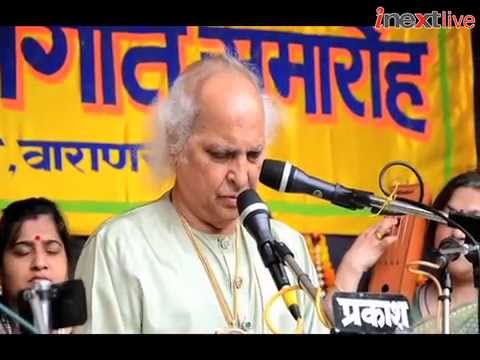
      I was in Varanasi to attend the Sankatmochan Music Festival. I was a four year old boy and I was or I am perhaps the biggest fan of Pt Jasraj. So, attending the Sankatmochan Music Festival would fulfil my dream of hearing Panditji live.
   At around 2 in night Pandit Jasraj started singing. I could see a lot of foreigners sitting in the audience and  listening to him. I didn’t understand why they were listening to him. What did they understand of the hindustani classical music?  But, perhaps now I know what

made them listen to him. Music is not about understanding, its about how an artist connects to the heart of each individual sitting in the audience. According to me a good artist is one who can connect to the maximum number of people sitting in the audience. And hindustani classical music is solely based on ragas, Ragas are the heart and soul of hindustani classical music. Each and every ragas has its own time for singing and each and every raga has different impact on the listener.
    In Indian Music concerts, I will regard the audience as the “consumers.” The quality of performance is dependent on the quality of the audience participation in this manner. It is definitely a two-way communication, where the performer and the audience share a symbiotic and mutually benefitting relationship. That is why, I regarded audience as the consumers. In Indian Music Concerts a person cannot just go and listen to the artist in any way he likes. There are certain etiquettes one is expected to show during the course of performance. For instance, clapping by audiences in the middle of the performance may be taken as disregard by the artist. 
  I would like to narrate one more instance where I was amazed to see how the Indian
Classical Music can involve school children with itself. I was in class 9th, when my school had organised a performance of Pt Rajendra Prassana, a well known flutist of our country under the SPIC MACAY banner. I had expected that the session would not be so interesting to the students but to my surprise, by the end of the performance each one of the student were singing along the tune of the flute. Everyone in the audience was fully engrossed in the performance. Seeing the audience involve the artists are also motivated to play or perform.
 So, to conclude audience or the quality of audience is an important aspect for a concert to be successful specially in Indian Classical Music.

Wednesday, 4 October 2017

MUSIC AS COMMUNICATION – AN INDIAN PERSPECTIVE

(This article written by me was published in UK based online magazine FFM.
Link to which is-http://ffmrecords.com/2017/10/04/music-communication-indian-perspective/)


Music is that medium of communication which provides a way by which people can share emotions, intentions, and meanings. Music can exert powerful physical and behavioural effects which can produce deep emotions within us. It can generate a sense of peace and happiness within a person. Music be it vocal or instrumental has a deep impact on the human body.

Playing an instrument is a way to express and communicate our thoughts and feelings. In Indian music where ragas are the whole and soul of the music, Indian musical instruments conveyed the essence of raga without the use of lyrics. The beauty of Indian music is that it is an unusual combination of technique, structure and improvisation. So, even the person playing some instrument can communicate a lot of things to the audience through its playing of a particular instrument. Every instrumentalist, specially in India has a distinct style of playing the notes.

Some instruments like sarangi and violin are considered to be the closest to the vocals of a singer. Instruments like flute and sehnnai have effectively communicated the sweetness and richness of a particular raaga or the song. If one listens to Pt. Hariprasad Chaurasia or Ustaad Bismillah Khan, its sure one won’t miss the vocals. Their instruments are sufficient to take the audience into a journey of melody and peace.

 In Indian Music concerts specially in instrumental music concerts, I will regard the audience as the “consumers.” The quality of performance is dependent on the quality of the audience participation in this manner. It is definitely a two-way communication, where the performer and the audience share a symbiotic and mutually beneficial relationship. That is why, I regarded audience as the consumers.  The instrumentalist attracts more audience then a vocal musician because in vocal music their is a barrier of language. For example- a person who does not understand Hindi may not be interested in Indian Vocal Music but that person may be interested in instrumental music because it does not include any language.  When our Indian instrumentalists tour different countries for the concerts, its not just they go and play a particular raga but its like communicating the Indian culture through their instruments.


To conclude, instrument playing is an effective way of communicating one’s emotions and thoughts to the audience.If one listens to Ustaad Amjad Ali Khan’s Raag Malhar one could feel the pouring of rains beside him/her. Its not just the case with Ustaad Amjad Ali Khan’s sarod but if one listens to anyone of that level one can get the true feel and essence of the raga/song.

Sunday, 17 September 2017

Indian Classical Music resonates in space...

Recently one of the veterans of Hindustani Classical Music had her birthday. She was a legend and people often confused her voice with that of a nightingale. I am talking about no one else but about Vidushi Kesarbai Kerkar. Most women singers of that time had a deep, resonant and strident female voice, but Kesarbai Kerkar’s voice was marked by its clarity, projection and open quality, all of which were rewards of a long learning from Alladiya Khan, the creator of Jaipur- Atrauli Gharana.
She was one such singer from Indian whose sweet and beautiful voice still resonates in space.
            NASA’s Voyager-2 mission enters its 40th year this year. The special thing about this spacecraft is that it carries different sounds and international music with it. The spacecraft which was launched on 20 August 1977. Among the international music and sounds the disc which the spacecraft carries, also carries a bandish from the Indian Classical Music.  A Hindustani classical composition called “Jaat Kahan Ho” sung by Surshri Kesarbai Kerkar, who is one of the all time great vocalist of the Hindustani Classical tradition. Kesarbai was born in 1893 in Goa and was awarded by the title of 'Surshri' in 1938 by Rabindranath Tagore on behalf of the residents of Kolkata for her sweet and mellifluous voice. Her song is played in outer space for three minutes and twenty five seconds. Being a student of Indian Classical Music I feel pride in writing that even today in space the Indian Classical Music resonates. The Voyagar-2 carries a 12-inch gold-plated copper disc which stores all the music and sound in it. Carl Sagan, was the one who chaired the NASA appointed committee which chose the Indian Classical Music in the golden disc.

    In the book "Murmurs Of Earth - The Voyager Interstellar Record", published in 1978, Ann Druyan, Sagan's wife, says that Robert Brown, the then Executive Director for the Centre For World Music had placed "Jaat Kahan Ho”, which is a composition of Indian Classical Music, at the top of his list of world music for outer space. Forty years on and 11 billion miles from earth in space there is the sound of India. And how did this happen? And this happens due the sweetness and the rich tradition of Indian Classical Music.
 So, this is all for today. We will continue talking about music in my future posts.

Thursday, 31 August 2017

Annabelle Creation- Review

I have been writing about music since long, so today I decided to write a movie review. Recently I got a chance to watch this movie and here are my thoughts for the movie-   I have to start off by giving a lot of props to director David F. Sandberg. He has appeared to elevate his skills as a director in Annabelle Creation.
   One of the best aspects of the film was the use of camera work to work with the shadows in many of the scenes. Having the audience peer into the darkness and let their imagination run wild is simply a great tactic for horror films. This really became a strength of the film especially when we couldn’t
really make out what the evil spirit actually looked like.
   Coming to the characters of the movie one must say that the acting in the whole movie is top-class and the characters are really well placed as per the requirement in the movie. The movie begins with what the title suggests - the literal making of the doll. Sam Mullins (Anthony LaPaglia), a doll maker, is putting the finishing touches on the first, and probably only, doll in this particular line of work. Soon the story proceeds and he is left with a note from his daughter, Bee (Samara Lee)-the real name of Annabelle- for a hide-and-seek game.
Sandberg also used the classical skill of utilizing the sound and volume to elevate many of the scary scenes. I think it’s safe to say that he also did a really nice job of executing jump scares throughout the film. They weren’t entirely predictable and even when you knew they were coming, they still scared the hell out of you.I loved the way how the haunting of the evil spirit leaves you feeling entirely out of control. You either have to watch the scary madness happen, or turn away and cover your eyes. It also really helped that the spiritual entity mixed things up a bit. There wasn’t just a single way that it would come and attack or scare characters.This film delivers some fun easter eggs that will surely hint at past characters, or even future movies to come. More specifically, Annabelle Creation connects the story of some of the past Conjuring movies. 

Monday, 31 July 2017

Communication through music...

Today we will talk about communication through music and how communication plays an important role in our day to day life. Communication is only possible when two or more persons are there. One who speaks, if he/she is capable of making other person understand, it is said that the communication works. In music specially in vocal music, proper understanding between the artist and the listener leads the way of successful communication.  Today I will just talk about the Indian Classical Vocal.
     The great tradition of Indian Classical Music is no more hidden from the world today. We, Indians, take pride in our rich culture and tradition. There is an easy availability of Folk Music and Classical Music in India. Of course,
Folk and Classical are meant for mass and class respectively, this is why a large amount of people taste Folk and Light Music as they relate with them easily. But this does not mean that the number of listeners in Classical Music is at all less. Indian Classical Music deals with Ragas and the Raginis. ‘Raga’ is the  heart and soul of Indian music which expresses the appropriate sentiment and mood. Forms of hindustani Classical Vocal Music such as Dhrupad, Dhamar, Khayal, Tappa, Thumri etc. In these, Dhrupad, Dhamar and Khayal are such forms by which the essence or the true flavour of the raga may properly be expressed. Tappa, Thumri etc are semi-classical forms and were included into classical concerts later on. Communication in Hindustani Classical Vocal Music comprises three factors- the performer, the listener and the music. A good performer is a good communicator always. He, besides being aware of the tradition of Hindustani Classical Music, also catches up the mood of the listeners and moulds his music accordingly. The moulding of music according to the mood of listeners makes music a good way of communication between the performer and the listener. The great poet and musician Rabindranath Tagaore says- ‘Art is never an exhibition but a revelation.’ The great hindustani classical vocalist Vidushi Kishori Amonkar says-‘ Sing to express not to impress.’ The purpose of all kinds of music is to express different moods. Similarly, every branch of Hindustani Classical Vocal Music follows this condition.
    To conclude, music is one of the few ways in which people can connect with each other without language. I remember when I had went to the Sankat Mochan Music Festival in Varanasi and Pt Jasraj was singing, many people from other countries were sitting and listening to him with their eyes closed. Even me remember everything Pt Jasraj sang that day though I was just 4 year old that time. So, this shows us how powerful is the communication through music. There’s something inside humans, and other animals, that recognises and responds to sound known as music. According to me music is even more important than language in helping people from different cultures to connect and understand one another.

 So, this is all for today and we will continue talking about music in the future posts.

Tuesday, 11 July 2017

वाह...उस्ताद... वाह!

जिनकी तबले की धुन पर दुनिया कहती है “वाह उस्ताद”! महज 12 साल की उम्र से ही जिन्होंने संगीत की दुनिया में अपने तबले की आवाज़ को बिखेरना शुरू कर दिया था। जिन्हें तबला विरासत में मिली है। हाँ! मैं बात कर रहा हूँ “उस्ताद ज़ाकिर हूसेन” की। १९५१ में उस्ताद अल्लाह रक्खा के घर जन्मे उस्ताद ज़ाकिर हूसेन आज तबले का पर्यायवाची बन चुके हैं। उस्ताद जी भारत में तो विख्यात हैं ही साथ ही उन्होंने दुनिया के कई कोनों में भी अपने तबले की धुन से लोगों को अभिभूत किया है। उस्ताद जीं ने अपने इंटरनेशनल करियर की शुरूआत बहुत छोटी उम्र में अमरीका से की। उन्होंने वहां
कई कॉन्सर्ट किए। उन्होंने मलयालम फिल्म वनाप्रसतम में भारतीय म्यूजिक एडवाइजर के रूप में कंपोज, परफॉर्म और एक्ट किया। इस फिल्म ने 2000 इस्तानबुल इंटरनेशनल फिल्म फेस्टिवल (टर्की), 2000 मुंबई इंटरनेशनल फिल्म फेस्टिवल (इंडिया) और 2000 नेशनल फिल्म अवॉर्ड (इंडिया) जीता। इन्हें सन २००२ (2002) में भारत सरकार द्वारा कला के क्षेत्र में पद्म भूषण से भी सम्मानित किया जा चुका है। उस्ताद ज़ाकिर हूसेन ने अपनी शिक्षा सेंट ज़ेवीअर कॉलेज मुंबई से पूरी की है। बचपन में उस्ताद जी के पिताजी उन्हें पखावज की तालीम दिया करते थे। उस्ताद जी तबले के पंजाब  घराने से आते हैं। एक इंटर्व्यू में जब उस्ताद जी से पूछा गया की उन्हें तबले के अलवा और कौन से वाद्य पसंद हैं तो उन्होंने जवाब दिया कि उन्हें पीऐनो भी बहुत पसंद है। उस्ताद जी ने दुनिया भर के नाम- चीन कलाकारों के साथ यादगार प्रस्तुतियाँ दीं हैं। मुझे उस्ताद जी और पंडित जसराज की जुगलबंदी सबसे ज़्यादा पसंद है।
अगर बात करें उस्ताद जी की तबले की धुन से तो वे ट्रेन की चलने की आवाज़ से ले कर घोड़े की दौड़ने की आवाज़ तक तबले से निकाल सकते हैं। मुझे अभी तक उन्हें सामने से सुनने का सौभाग्य नहीं मिला है किंतु, मैं उनकी जितनी रिकॉर्डिंग सुनता हूँ उतना ही उन्हें सामने से सुनने की इच्छा बढ़ती जाती है।
    उस्ताद जी की उपलब्धियां एक पन्ने में समेटने लायक नहीं है इसलिय आज के लिए बस इतना ही। आगे फिर मिलेंगे और संगीत पर चर्चा जारी रखेंगे।।

Tuesday, 4 July 2017

Orientation at Xavier University...

The Xavier University is set in the outskirts of Bhubaneshwar. The campus of the college is enough to make a student want to be a part of this institution. Managed by the Jesuit Educational Society the university is one of the most premier institution in the country. 
    I feel myself lucky to be a student at this university. I joined the Xavier School of
Communications to fulfil my dreams of becoming a journalist and writing about the rich tradition and ethos of the indian culture. Since I have been a regular blogger for about last couple of years so I have an inclination towards becoming a print journalist. 
  Coming to the initial day of me coming to the university. It was really a well planned program for the orientation to welcome the new comers to the Xavier School of Communications. The day started with we getting roses from the senior students of this school. Later some photographs of we freshers were clicked so that it remains in our memory for whole of our life. Now we were asked to enter the class room for the start of the formal function of the orientation. A formal welcome speech for us was conveyed by the Dean and then Fr. Tony acquainted us with the goals of the University and in a very simple way he described the university’s logos and symbols. After that a small break was given to us and then there was formal lightning of the lamp by the VC of University and the special guest the MD of Orissa TV Ms Jagi Mangal Panda. Ms Panda tried explaining us about the wonderful career we could have in the field of communications and she also told us few things how one can be a successful media person. Later we interacted with the seniors of our course. And it was the time for lunch and the session ended. The second session started with the Dean explaining us the Manual Of Polices we need to follow for the whole year. Then, there was a session on future perspectives of media industry by Prof. Raj Kishore Patra. He with his stats and datas tried explaining us how the media is growing in the present years. By the time we were tired  and just wanted to return back to our hostels but then there was a session with Prof Vijay titled “Lets Play”. In this session Prof Vijay divided the whole batch into two groups and made us play few simple games. This session was really enjoyed by every individual new comer. Even the Prof. promised some gifts for the winning team. This is how the first day of our orientation ended. 
     The second day of our orientation started with we being asked to speak about ourselves in front of the camera. For me it was really tough to do since I have always been phobic to speak in front of camera that too in front of the batch mates as audiences. Some how I managed to speak and the session ended with Prof. Nadira Khatun acquainting us with how to speak out our thoughts in a creative way.After that we were taken for the tour of the rich library of the university. I really found some of the amazing books there and I am looking forward to read them during my stay at the campus. Then we were brought back to the class and it was the time for the orientation to end and Fr Lourduraj, the dean said the final words for the orientation ceremony to end. It was really great to be the part of the orientation ceremony. I look forward for my stay at the campus in the coming years.

Tuesday, 20 June 2017

Yoga & Music...

"Music proves that we are more than physical beings, music is evidence of our divinity." Music is considered divine in whole world be it the Indian culture or the Western Culture. Music provides human mind such peace and tranquility which nothing else can provide.
 On the other hand, Yoga a 5000 year old spiritual science is now considered one of the essential path to lead a happy and healthy life. Today is 21st of June and today we celebrate two important events-" World Music Day" and "International Yoga Day". On December 11 in 2014, the United Nations General Assembly declared June 21 as the International Day of Yoga. On the other hand the concept of a united day for musicians to mark summer solstice was first proposed by American artiste Joel Cohen back in 1976. But it was France that first incorporated World Music Day as a day of national importance, which was later adopted by many countries.
         It's proven that Yoga has physical benefits such as increased flexibility, improved cardio and circulatory health, improved respiration, among many others. Aside from physical benefits, Yoga also helps manage stress by the power of meditation and breathing.  Music is also a creative tool to improve and develop the mental and physical well being of a person. " Music is a way of expressing
our experiences. Music is a way of outward activity and inward activity”  (According to Music Therapy Association of British Columbia). Like the different aasanas in yoga have different effects on our body so in the case with the Indian music; different raagas have different effect on our body. Raaga Gurjari Todi has a capacity to cool down the liver and Raga  Gurjari Todi and Yaman has a power of sustenance. Both raagas have a power to stabilize the wandering attention  which is very important for the meditation. Raaga Abhogi helps  to  stimulate the digestion process. Raaga Bhairav and Durga have a power of divine bliss and  protection. Raaga Jaijaiwanti helps to  controls five sense organs. Raag Malhar is useful in the treatment of asthma and sunstroke.Music  can bring a person to tears. It can make a person laugh. Most definitely, it is our world’s purest universal language.
    On the other hand Yoga is a mind-body practice that combines physical poses, controlled breathing, and meditation for relaxation.Yoga may help reduce stress, lower blood pressure and lower your heart rate. Like music  yoga also has many physical benefits such as increased flexibility, improved cardio and circulatory health, improved respiration, and many others. Since time immemorial music has ran in the veins of humans. The first musical instrument was the human voice.
Now we have come to the end of the article. To conclude, in the fast moving world where stress has become a part of the lifestyle of most of the people, yoga and music can be a great instrument for eliminating stress and inducing peace in the human minds.

Saturday, 27 May 2017

Western Music...


Whichever be the music. Be it the Indian Music or the Western Music each one of them is based on melody and rhythm. But there are certain differences in these music forms. Lets elaborate some distinct distinction between the two popular form of music.
   The first is based on melody-single notes played in a given order, while the second is harmonic: a group of notes called chords played simultaneously. 
Western music may be defined as organized instrumentation and sound created and produced in Europe, the United States, and other societies established and shaped by European
immigrants. This includes a wide range of musical genres, from classical music and jazz to rock and roll and country-western music. The late Dr. Rabindranath Tagore who was a musician himself and knew both the systems put it this way: "The world by day is like Europeans music-a flowing concourse of vast harmony, composed of concord and discord and many disconnected fragments. And the night world is our Indian music: one purem deep and tender raga.Our music draws the listener away beyond the limits of every day human joys and sorrows and takes us to the lonely region of renunciation which lies at the root of the universe, while European music leads us to a variegated dance through the endless rise and fall of human grief and joy.” Basically Indian music evokes a spiritual sentiment and discipline in a person. Vocal singing is an act of worship and not the display of mastery over raga-technique. In the West, the singing of a song is a formal exercise, not involving devotion like the Indian Music. Guru-shishya tradition is responsible for the deep attachment and dedication of the student to the teacher. In the West, usually a music teacher is just a person hired for giving lessons and there is no a relation of guru-shishya between the teacher and the student.
Indian music, like Western music, is based on melody and rhythm, but it has no foundation of harmony like the western music. The Indian system is horizontal, one note following the other, while the European is vertical-several notes at a time. Yehudi Menuhin, the noted composer and musicologist, highlights the difference between the two systems by describing Indian music thus: "The appreciate Indian music, one has to adopt a completely different sense of values... one must orientate oneself and at least for the period concerned, forget there is a time-clock ticking away and merely sink into a kind of subjective, almost hypnotic trance. In that condition, the repetitive features of Indian music, both rhythmic and melodic, acquire an extraordinary fascination and charm... despite the domination of this hypnotic mood, a characteristic of Indian music is that far from deadening the intellect, it actively liberates the mind."The popularity of western movies (singing or no singing) and cowboy music had died down by the '60s. However, contemporary western artists like Ian Tyson, Riders in the Sky, and Tom Russell still enjoy cowboy festivals (featuring both poetry and music) attract surprisingly large and enthusiastic crowds.

Thursday, 18 May 2017

Jaipur Gharana...

There is a rich tradition of Gharanas in classical Hindustani music. The music Gharanas are also called styles. These schools or Gharanas have their unique styles in the traditional mode of musical training and education. Every Gharana has its own distinct features. The main area of difference between Gharanas is the manner in which the notes are sung. The concept of a Guru- Shishya parampara leads to the development of Gharanas.
         It is considered that this gharana was brought to life by Ustaad Alladiya Khan. Ustaad Alladiya
Ustaad Alladiya Khan
Khan was a resident of Uniyara, a small place in Rajasthan. His forefathers were also musicians. They were dhrupadiyas. But Ustaad ji himself started singing khayals and he taught his sons and disciples khayal. His main disciples were his famous younger brother Haider Khan, Bhaskarbuwa Bakhale and his own sons. It is said that the gayaki of his forefathers were similar to that of the gwalior gharana gayaki. It is also said that Ustad Ji himself sang his fore fathers' gayaki at younger age, it was later that he switched to khayal gayaki. Ustad Jee would practice for so long time that his voice started to crack. Everyone started believing that he could not continue singing anymore. But he went to jodhpur and a hakim treated him and gradually his voice started becoming like before. Since, he was treated in the state of Rajasthan so he named the gharana "Jaipur gharana".
    The gharana which gave our country some of the finest musicians like Vidushi Kishori Amonkar, Vidushi Ashwini Bhide Deshpande, Vidushi Kesarbai Kerkar and many more
   Now lets talk about the gayaki of this gharana. What are it's specialties? The gharana is characterised by the low tempo aalapchari like dhrupad. It is also known for the small bol tans. In Jaipur gayaki the words of bandishes are pronounced with so much of sweetness that the listeners are instantly connected to the singer. Not only are the notes sung in rhythm with the taal but progress between the matras (beats) is in fractions of quarters and one-eighths. While being mindful of so many factors, musicians of this gharana still have a graceful way of arriving at the sam without having matras to spare!  At last I would conclude with these lines that very few gharanas pay so much attention to the esthetics and laykaari in singing bol-alaaps and bol-taans Jaipur gharana is one of them which has paid such attention.

Sent from my iPhone

Sunday, 14 May 2017

गिरिजा...

वाणी प्रकाशन से प्रकाशित "गिरिजा" नामक पुस्तक जिसको की श्री यतीन्द्र मिश्र जी ने लिखा है, एक बेहद सरल और रोचक ढंग से लिखा विदुषी गिरजा देवी जी के व्यक्तित्व पर आधारित एक पुस्तक है। 
    विदुषी गिरजा देवी जी के व्यक्तित्व के कई आयामों के बारे में बताया है लेखक ने।पुस्तक में गिरजा देवी जी के पान खाने की आदत से ले कर, उनके बचपन की कई क़िस्सों तक की बातें की गई है। 
   शुरुआत में लेखक ने गिरजा देवी जी की बनारस वाली आवास का चर्चा किया है की वहाँ कैसा माहौल होता था जब गिरजा देवी जीं रियाज़ करती थीं अथवा अपने विद्यार्थियों को संगीत की तालीम दिया करती थीं।इस पुस्तक में इनकी गाई गयीं कई चर्चित बंदिशों की भी चर्चा है जैसे- अप्पा की गाई बहुप्रशंसित चैती- "एहीं ठैंया मोतिया हेराय गईली रामा, कहवाँ मैं ढूढूँ"।गिरजा देवी जीं जिन गायकों अवं गायिकाओं से प्रेरित थी उनमें डी॰वी॰ पलुसकर, केसरबाई केरकर, रसूलन बाई जैसे दिग्गज मजूद हैं। इस पुस्तक में गिरजा देवी ने यह भी बताया है की क्यों वे इन दिग्गजों से प्रभावित थीं। अप्पा के तालीम देने की तरीक़े के बारे में भी बताया गया है,कैसे वे बंदिश की अदाएगी के बारे अपने शिस्यों को बड़े प्यार से समझाती हैं।दादरा, टप्पा , ख़याल, ध्रुपद, धम्मार सभी विधाओं की तालीम देती हैं अप्पा। गिरजा देवी जीं के लिए कोई भी राग ज़्यादा प्रिय नहीं, किंतु वे राग भैरव को सबसे अधिक गातीं हैं। उन्हें भैरव में गाई जाने वालीं बंदिशें बेहद पसंद हैं। अप्पा को काशी प्रिय है और वे शिव जी की उपासिका हैं। और मान्यता ऐसी है की भगवान शिव की प्रिय राग भैरव है इसलिए गिरजा देवी जी को भी यह राग से काफ़ी लगाव है। गिरजा देवी जीं का मानना है कि गायन में भावों की सरलता ही उनकी गायकी को सबसे भिन्न बनाती है। ऐसी कई बातें हैं इस पुस्तक में विदुषी गिरजा देवी जीं के बारे में जो पहली बार हम जैसे संगीत-प्रेमी के सामने आयीं हैं इस पुस्तक के माध्यम से।
   पुस्तक के अंतिम भाग में विदुषी गिरजा देवी जी से लेखक की वार्तालाप है, जिसमें अप्पा जी ने अपने बारे में कई रोचक बातें बताईं हैं। लोक गायन से लेकर शास्त्रीय गायक तक, गुरु- शिष्य परम्परा से लेकर अप्पा की पसंदीदा बंदिशों तक सभी पर चर्चा की गयी हैं इस वार्तालाप में।
  हर संगीत प्रेमी को निश्चित ही इस पुस्तक को पढ़ना चाहिए। बहुत कुछ नया जानने को मिल सकता है इस दिग्गज विदुषी और शास्त्रीय संगीत के विषय में।।

Saturday, 6 May 2017

Maihar...

Once upon a time Lord Shiva was carrying the dead body of mother, Goddess Sati. Meanwhile, while carrying her body the necklace of Goddess Sati fell on the ground and it is believed that from then that place was known by the name- "Maihar" (Mai + Har). This town was once the capital of the princely state of Maihar.  Later in 19th century this became a princely state under the British India. A beautiful city surrounded by trikotta hills, is still a tourist destination. The famous Sharda temple which is situated high on the hills is still a wonderful destination for the people to visit.
Ustad Aashis Khan
   Anyway don't think I am talking about the history of the town. I will continue talking about music as usual. I talked about this town just because this town has given us, our country wonderful musicians. Moreover it gave our country a ratna- Bharat Ratna --Pt Ravi Shankar. Yes! the great sitar maestro came from the gharana- Maihar Gharana.
    The gharana-Maihar was established by the great Ustaad Allauddin Khan.To Speak about Maihar Gharana, it is better to know a few things about ‘Baba Allauddin Khan Saheb’. Throughout his whole life, he learnt from many musicians. Wherever he went when anything inspired him, he just took it. He had a tremendous grasping power. Baba was not only a singer, and instrumentalist but also knew drums. He was a good pakhawaj and tabla player too. He also used to play folk Drum, dhol, from Bengal. He had improvised the sitar and the sarod and infused them with the been-baj of the Rudra-veena, the Surbahar and the Sursingar. So this also influenced his style and his compositions. Baba’s association with different musicians and learning from some of them, finally brought out a style of his own which is called the Maihar style of sitar playing today.The uniqueness of this gharana is-the great facility with which the players present their music in uncommon and off beat talas and the unique improvisation and rhythmic variations in their tanas.
Baba Allaudin Khan
Usataad Ali Akbar Khan, son of Baba Allauddin Khan is one of the greatest sarod player our country ever produced also came from this gharana though maihar gharana is known for the sitar maestros.
Infact Maihar Gharana is one of the most prominent names in the development of North Indian classical music and its heritage.  The famous  living sarod maesto Ustaad Aashis Khan, who is the blue blooded desencdent of this gharana,son of Ustaad Ali Akbar Khan, is one of the most accomplished sarod player of the present time. He gave his debut public performance at the age of 13, with his grandfather, on the All India Radio "National Program", New Delhi, and in the same year, performed with his father and his grandfather at the "Tansen Music Conference".
Its not possible for me to talk everything and about every muscican of this gharna in one small post since this gharana has got so many accomplished musician like- Pt Vishwa Mohan Bhatt, Pt Ronu Majumdar and many more.  One can keep on writing endlessly on the great maihar gharana.This gharana occupies an important place in Indian classical music besides winning the hearts of millions of people with the music from this gharana's musicians.


Sent from my iPhone

Tuesday, 2 May 2017

Gandhi and Music...

Mahtma Gandhi- The father of Nation, we all know him as a freedom fighter, a person who always beleived in truth and non- voilence, a divine soul and a person having great love and respect for his country. We all have heard/ read about his various aspects of life but today we will talk about his love for music. Yes! most of the people think that he was against all arts and music. But his thought for music was-
“Music does not proceed from the throat alone. There is music of mind, of the senses and of the heart. "
Well! we all have came across the famous bhajans- "Vaishanav Jan" and " Raghupati Raghav", these bhajans were played at his ashram regularly. According to him In true music there are no barrier. Music is that powerful weapon which has the power to change/control one's emotions. Gandhijis' day would start with bhajans and would end with bhajans. Famous musicians like- Pt. N. M. Khare, Mama Fadke, Sri Vinoba and Balkoba Bhave were a part of his ashram's bhajan sessions.. During the bhajans in his ashram, there was no discrimination of religion, caste, creed, region, languages etc. According to him music was a great way of national integrity because here only musicians of different relegions sit together and perform at a concert. He often said, "We shall consider music in a narrow sense to mean the ability to sing and play an instrument well, but, in its wider sense, true music is created only when life is attuned to a single tune and a single time beat. Music is born only where the strings of the heart are not out of tune." When Gandhi Ji was in South Africa he had started evening prayers in the Ashram. That collection of bhajans were later published under the name of - 'Nitivam Kavyo'.
                                       
Listening to music can help us in lot of ways. Maybe, that's why Gandhi Jee was so attracted towards music. Music is a fantastic brain exercise that activates every known part of the brain.  It can make one smarter, happier and more productive at all stages of life. Gandhi Jee even thought that music was a way of establishing peace and harmony in the minds of people. Listening to music gives an eternal peace to human mind thus, will ensure that their mind isn't attracted towards violence.
Someone once asked the Mahatma“Mahatmaji don’t you have any liking for music?" Gandhi Jee replied- “If there was no music and no laughter in me, I would have died of this crushing burden of my work.” This shows how Gandhi jee was so attached to the music.
 His love for music can be seen by the letter he wrote to Rabindranath Tagore on December 22, 1945 in which he suggested Rabindranath Tagore that due place should be given to Indian Classical Music as well as Western Classical Music along with bengali music. This also shows that Gandhi Jee had great knowledge of different genres of music.
    Gandhi Jee's life was full of rhythm and harmony. He had a habit of starting his day with bhajans and also ending his day with the bhajans. A lot of violence is witnessed nowadays around the world perhaps music is the only way to ensure peace, harmony and brotherhood among people.

Music Has No Boundaries...

One thing which can’t be stopped from travelling to a different country without a visa or passport is- Art and Music. I will talk about ...